
Key Points
- Dr. Stride is a basic and translational researcher at the University of Oxford in the UK.
- Her work in microbubble design and drug delivery may soon change the way patients receive chemotherapy and high-powered antibiotics.
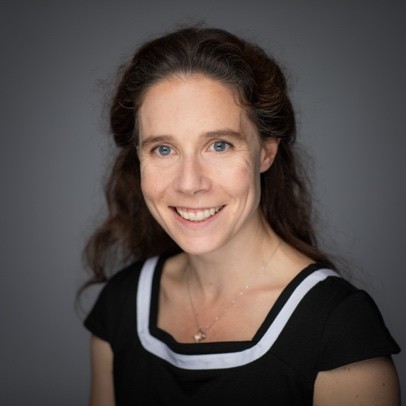
Eleanor Stride, PhD, OBE, FREng, HonFIET, is a statutory professor at the University of Oxford’s Institute of Biomedical Engineering—and part of the institution’s Focused Ultrasound Center of Excellence. After completing her academic training at University College London (UCL) followed by a Royal Academy of Engineering Research Fellowship, Dr. Stride moved to Oxford in 2011. Over the past 15 years, her expertise in microbubble design and drug delivery has led to discoveries that may change the way that patients receive toxic drugs like chemotherapy and high-powered antibiotics.
We recently spoke with Dr. Stride to learn more about her basic and translational research. Read on to learn more about microbubbles (and their coatings), drug delivery for cancer and chronic infections, and her many international collaborations.
When and how did you get interested in focused ultrasound?
I enjoyed learning about ultrasound physics while studying mechanical engineering as an undergraduate, and I completed my undergraduate dissertation on ultrasound imaging of oil pipelines. During that time, a new radiologist moved to our university and came looking for people interested in ultrasound physics. My supervisor, Nader Saffari, PhD, called me into the office and asked me if I’d be interested in investigating whether bubbles were safe in the body. Although I was not planning to pursue a PhD at the time, they convinced me otherwise! I guess it was serendipity that Peter Dawson, MD, came to UCL at that time.
What are your areas of interest in focused ultrasound?
I develop microbubbles for imaging, therapy, and drug delivery. My career began by mathematically modelling what effects bubbles might have on biological tissue under diagnostic ultrasound. It became clear quite quickly that the safety concerns were very limited. Along the way, though, I became interested in how the mechanical properties of the bubble coatings could affect bubble dynamics and how that might be exploited to produce bubbles that could have a beneficial effect upon tissue: in particular, using them as drug delivery vehicles.
What is the overall goal of your work?
We are trying to find more effective ways to deliver extremely toxic drugs, like cancer chemotherapy and antibiotics, which have many side effects when injected directly into the bloodstream. In fact, the efficacy of these medicines can be limited by their toxicity. Finding ways to deliver them more efficiently is our overarching goal.
Where is your laboratory located?
We work on the hospital campus in Oxford. Biomedical engineering was moved there in 2007, shortly before I came to Oxford. We then moved to our current building in 2022, so we are directly connected to the hospitals, which is fantastic. We work very closely with the clinicians here.
How large is your lab and your research team?
We have a unique arrangement with seven principal investigators working within the same laboratory. In total, our highly multi-disciplinary group is now at about 50 researchers. Nearly everyone in the group has 3 or 4 supervisors, which is really nice. The team includes clinicians to mathematicians. Making sure that we are all trying to speak each other’s language as much as possible is key to what we do. The team has a range of scientific backgrounds, ages, and world cultures represented, which is really great.
How many students do you have right now?
I currently have 8 postdoctoral researchers, 15 graduate students, and then 2 or 3 undergraduate students doing projects each term – plus a few people coming in to do internships. It’s a nice mix.
Do you have collaborators outside of your large research group?
Beyond Oxford, I have maintained strong links with clinicians and academic colleagues in London. In Northern Ireland, we collaborate with researchers at the University of Ulster. We also work with colleagues at the United States National Institutes of Health who are looking at delivering cancer vaccines with microbubbles. Finally, we have several collaborations in the Netherlands with the University of Twente and Erasmus MC in Rotterdam.
In which clinical indications are you most interested?}
Treating cancer has been my main goal for a long time. Although we are starting with other tumor types, our ultimate target is pancreatic cancer because—unfortunately—it is such an incredibly difficult disease to treat.
Your team is about to launch a new clinical trial?
Our first clinical trial is in the planning stages. We will be investigating the use of focused ultrasound plus microbubbles for delivering chemotherapy in patients with breast cancer. The enrollment site will be at a clinic in Northern Ireland. If we can establish safety and efficacy in breast tumors, we can move forward from there. With my colleagues in Northern Ireland, Professors Tony McHale, PhD, and John Callan, PhD, we have engineered a bubble to encapsulate multiple chemotherapeutics. The main idea is to minimize the amount of drug needed to reduce the side effects by combining mechanical damage with localized drug delivery. It works very well in mice, so fingers crossed that will translate to humans. Depending on approvals, we hope to start the clinical trial this year.
You are also using focused ultrasound to address antimicrobial-resistant infections?
With many infections, conventional antibiotics do not work sufficiently well. Bacteria secrete a sticky biofilm around an infection site and hide inside of it, so it can be incredibly difficult to get a sufficient dose of antibiotics past this barrier. Our idea is to use focused ultrasound cavitation to break up the biofilm, deliver the drugs locally, and kill the bacteria. Our first clinical trial for this indication is in the pipeline to begin in the next 12 months. We will begin with chronically infected wounds caused by severe burns. Hopefully we can establish safety and tolerability and then move on treating chronic wounds, bone infections, and other infections that are difficult to treat with systemic antibiotics.
Is antibiotic toxicity a problem?
Yes, it is a huge problem. We talk with a lot of patient groups, particularly those who live with chronic urinary tract infections. Some people have suffered for 20 years with an infection that will not clear. Furthermore, prolonged heavy use of antibiotics damages the gut bacteria. While studies show that there are bacteria throughout the body that are probably all doing something quite useful, we are carpet-bombing them with powerful antibiotics. These “treatments” have many horrible side effects and decrease resistance to other diseases, including coughs and colds. Research is also increasingly recognizing the link between gut microbiome health and mental health. Patients who are consigned to decades of antibiotics are having a really horrible experience.
Do you plan to combine the ultrasound with antibiotics or is ultrasound alone enough?
It depends. Ultrasound alone may be enough in infections that have not gone too far. Breaking up the biofilm would allow routine systemic antibiotics to work well. Combination therapy may be necessary, however, for wounds where the bacteria has become embedded. The general idea is to reduce the total amount of antibiotics needed and to localize it, thereby reducing the serious side effects.
What are your laboratory results for using your method with antibiotic-resistant bacteria?
The results depend on what is making the bacteria resistant to the drugs. In many cases, the resistance is caused by the biofilm. While it is true that some bacteria have genetically evolved to resist a particular antibiotic, in many cases the resistance exists because the bacteria are physically protected by the biofilm. We recently published an in vitro study showing that we could wipe out persister cells from biofilm-covered wound sites that were growing clinically derived bacteria. My student, Victor Choi, led that study. The next step will be to try it in an animal model while simultaneously moving toward a clinical study.
What device(s) do you use for your focused ultrasound work?
Although we have spent a lot of time designing devices over the past few years, we have also realized that it may be optimal to design our protocols to work with an existing clinical device. Going forward, our clinical research will employ one of our several adapted clinical diagnostic ultrasound scanners. We have also done a lot of our work with Verasonics and other commercial probes. Many of the existing commercial systems can be used for therapy, which saves regulatory paperwork and time.
What are your greatest achievements?
The first study that we did in humans was the delivery of oxygen with bubbles, and this stands out to me. It was exciting to see something that we tested over many years actually be given to another human (and it worked). There are also some nerdy things on cavitation modeling that I am proud of since I still get excited about fundamental science. We discovered some of the nonlinear dynamics for cavitation and how cavitation is affected by microbubble coatings.
Do you have any major disappointments?
Good science is not always enough. We spent a lot of time over several years working on a targetable bubble that is loaded with magnetic nanoparticles. These bubbles can be localized to a particular region with a magnetic field to dramatically increase their concentration (doing this translates into a large improvement in therapeutic effect, because more bubbles equal more effect). We began translating this technology, including designing a probe with an ultrasound transducer plus a very powerful magnet. It was working really well. Then one day, our funding source withdrew its support due to regulatory safety concerns about magnetic particles. Although magnetic nanoparticles are already used clinically for MRI, this wasn’t enough reassurance. It was all quite depressing, especially because we had very good scientific data to support both the safety and efficacy. I hope that is not the end of that story, because the technology has a lot of promise.
What are the impediments to your success?
The thing that keeps me up at night is how expensive things have become, especially for conducting clinical trials. The costs of obtaining regulatory approval, setting up manufacturing from scratch, and paying someone to run a clinical trial is multi-millions of dollars. The amount of time and energy that it takes is definitely an impediment. We will get there, but it is a steep uphill battle.
What is on your research wish list?
On the translational side, we are pushing ahead with our pipeline: the cancer chemotherapy delivery study and the antimicrobial work. I hope to add an immunostimulatory study as well. For our basic research, there is a lot of mechanistic stuff we’re trying to tease out, including the mechanism behind sonodynamic therapy and the relationship between mechanical force and cellular response.
What are your funding sources?
We receive UK government funding through the UK Research and Innovation (UKRI) research councils and some funding from industry for specific projects as well. We receive charity funding from patient charities. Cancer Research UK, Pancreatic Cancer UK, and the Focused Ultrasound Foundation have all been extremely supportive of our work. Oxford has been named a Focused Ultrasound Centre of Excellence, and we are very grateful for that. Finally, we have had some incredibly generous philanthropic donors.
Has the Foundation played a role in your work?
When I started my research career, ultrasound therapy was still a very niche field. The Foundation has raised the profile of ultrasound research, initially in America, and now in the UK as well. Many people now have heard of focused ultrasound, and they’re excited by it, which is wonderful for all of us. The direct funding we have received from the Foundation more recently has been great, but it has also been hugely supportive of quite a few research conference symposia that we’ve been running in Oxford. Professors David Cranston, Paul Lyon, and Gail ter Haar have been running focused ultrasound symposia for a long time, but having the support from the Foundation has been absolutely brilliant.
Is there anything else that you would like to share about your work?
Everything we do is a massive team effort. There are at least 5 to 10 people behind every single paper, all of whom are critical. One person came up with the ideas, another wrote for the funding, and someone else was advising. Several people working incredibly hard in the lab together to do the experiments. This is not always communicated as clearly as possible to the public. I do not sit in the lab and do all of this work by myself – we have a wonderful team!
Videos
Dr. Stride was featured on Born to Engineer and BBC World Service’s The Engineers.
Related Stories
Born To Engineer: Oxford Engineers Develop Ultrasound-Triggered Nanoparticles to Combat Antibiotic-Resistant Biofilms
Meeting Report: Acoustical Society of America May 2024
Meeting Report: Oxford Focused Ultrasound Annual Meeting October 2024
The Focused Ultrasound Foundation Designates the University of Oxford as a Center of Excellence October 2023