
Key Points
- The Kundruns are philanthropists and equestrian advocates whose shared passion for horses and animal welfare has defined their lives and giving.
- With their recent transformational gift, the Foundation’s Veterinary Program has been named for the couple.
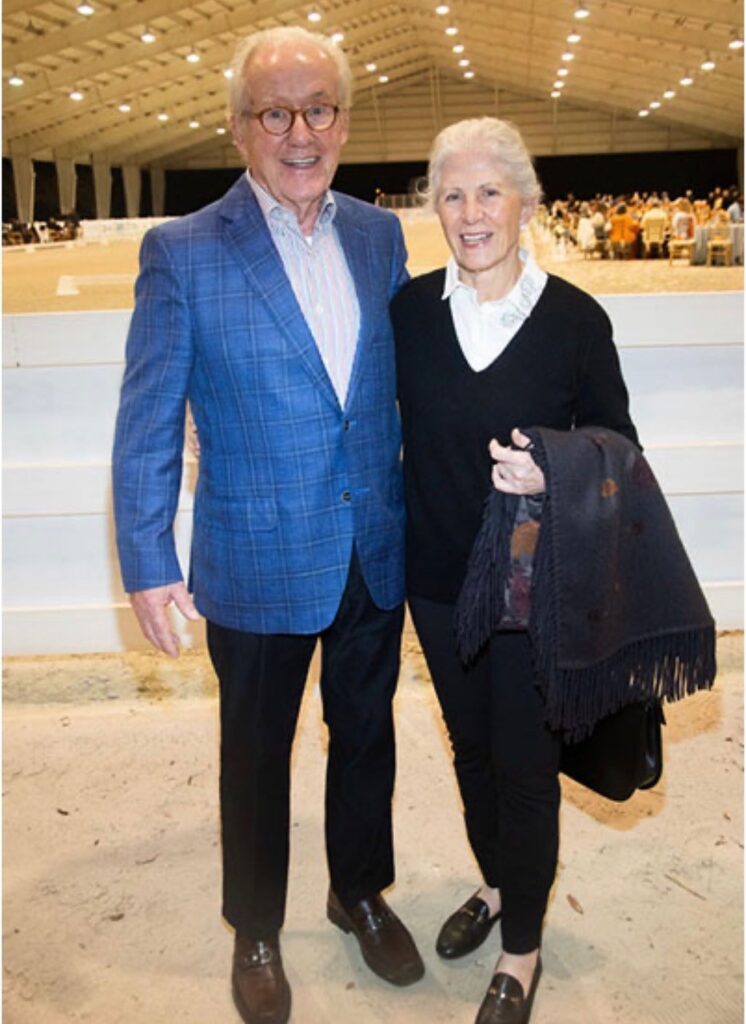
Claudine and Fritz Kundrun are philanthropists and equestrian advocates whose shared passion for horses and animal welfare has defined their lives and giving. Fritz was born in Germany and began his career with Thyssen, the country’s largest steel producer. There, international assignments exposed him to the challenges faced by working animals in developing countries. Claudine was raised in the renowned horse center of Chantilly, France, and moved to the United States in 1978. She has remained a dedicated rider, and her awareness of equine welfare grew after encountering a local rescue effort, shaping her future philanthropic work.
Together, the Kundruns are leading supporters of Brooke USA, which works to advance the welfare of working horses, donkeys, and mules worldwide. Claudine founded the Equine Welfare Society with Fritz’s support. The couple also recently provided funding for a project at the University of Pennsylvania School of Veterinary Medicine that supported the acquisition of a specialized positron emission tomography (PET) scanner to image the equine brain. Researchers there will use the scanner to study neurological diseases, especially equine degenerative myeloencephalopathy (EDM), which currently cannot be definitively diagnosed until post-mortem histopathology is conducted. The Kundruns are also prominent figures in international dressage, having owned Olympic medal–winning horses, and are dedicated supporters of equestrian sport.
Their broader commitment to education and history was reflected when they established the Fritz and Claudine Kundrun Fellowship through the Robert H. Smith International Center for Jefferson Studies at Monticello.
Earlier this year, the Kundruns generously donated $1.5 million to the Focused Ultrasound Foundation to establish the Claudine and Fritz Kundrun Veterinary Program to advance focused ultrasound to benefit both companion animals and their owners. We spoke with Claudine and Fritz about why they believe in the potential of focused ultrasound and why they have supported the Foundation to champion the cause.
What is your connection to the Foundation? How did you first hear about it?
When we moved to Charlottesville, Fritz became involved with the Thomas Jefferson Foundation, which owns and operates Monticello. He served on the Thomas Jefferson Foundation’s Board for 10 years, and we met Dr. Neal Kassell at various events hosted at Monticello. Over time, we became very good friends, and Neal introduced us to focused ultrasound.
You have been generously giving to the Focused Ultrasound Foundation for more than 15 years. What initially moved you to get involved?
At first, we were a little skeptical about the technology. It seemed too good to be true, and we spoke with some doctors who knew nothing about it or were dismissive. However, Neal gently brought us around. We read John Grisham’s book, “The Tumor,” and became increasingly curious. We were convinced after watching the TEDx Charlottesville talk, which featured Neal, John Grisham, and a Parkinson’s patient who had been treated with focused ultrasound. It was time to get involved!
Have there been any moments or milestones with the Foundation that felt especially meaningful or reaffirming to you?
The turning point for us was hearing the research into pancreatic cancer. Claudine lost her father to pancreatic cancer after being his primary caregiver during his final three months. He was 70 years old. She also lost her maternal aunt to pancreatic cancer at the age of 50. The advances in focused ultrasound for this terrible disease were reaffirming. We thought it would be fantastic if we could diagnose and treat it earlier because pancreatic cancer is one of the deadliest, most hopeless diagnoses to receive.
What excites you most about focused ultrasound?
What excites us most – and more so every time we read the newsletter – is the breadth of applications that keep growing! It is also encouraging that the whole world is united in research into this amazing technology.
Why did you choose to donate specifically to the vet program with this most recent gift?
It is thanks to the Foundation’s newsletter that we decided to get involved. There was a segment with a veterinarian talking about applications in veterinary medicine, and we found it so interesting and hopeful. We have all had pets who died of cancer or had benign tumors that impacted their quality of life. This happens to pets that are not very old and could be helped quickly and easily if we have the right studies, equipment, and encouraging results. It is also worth noting that surgery and a long rehabilitation period are not very appealing for many pet owners.
What impact do you hope to achieve through your philanthropy?
We would like the studies on pets – and especially horses – to advance so that we can use the therapy relatively soon. We need to start somewhere, and that requires funds. We would like to see the day when focused ultrasound therapy is commonplace in well-equipped regional veterinary hospitals.
When you think about the future, what are you most hopeful about in terms of the Foundation’s work and its potential impact?
We are hopeful to see the day that focused ultrasound becomes universally well-accepted and appreciated by all as a standard of care.
What would you tell someone who is considering making a gift to the Foundation?
Claudine especially speaks with many people about it when the occasion presents itself, but there is still more to do to raise awareness. We would say, “Be curious! If you haven’t heard of it, look it up.” We hope this gift and campaign is an opportunity to introduce the technology to more people and pique their curiosity.