
A Life Reclaimed from Essential Tremor: Melissa Finds Hope Through Focused Ultrasound
Key Points
- Diagnosed in childhood, the condition disrupted Melissa’s daily routines and her sense of independence.
- Everything changed after she underwent bilateral focused ultrasound treatment, calling it “a complete miracle.”
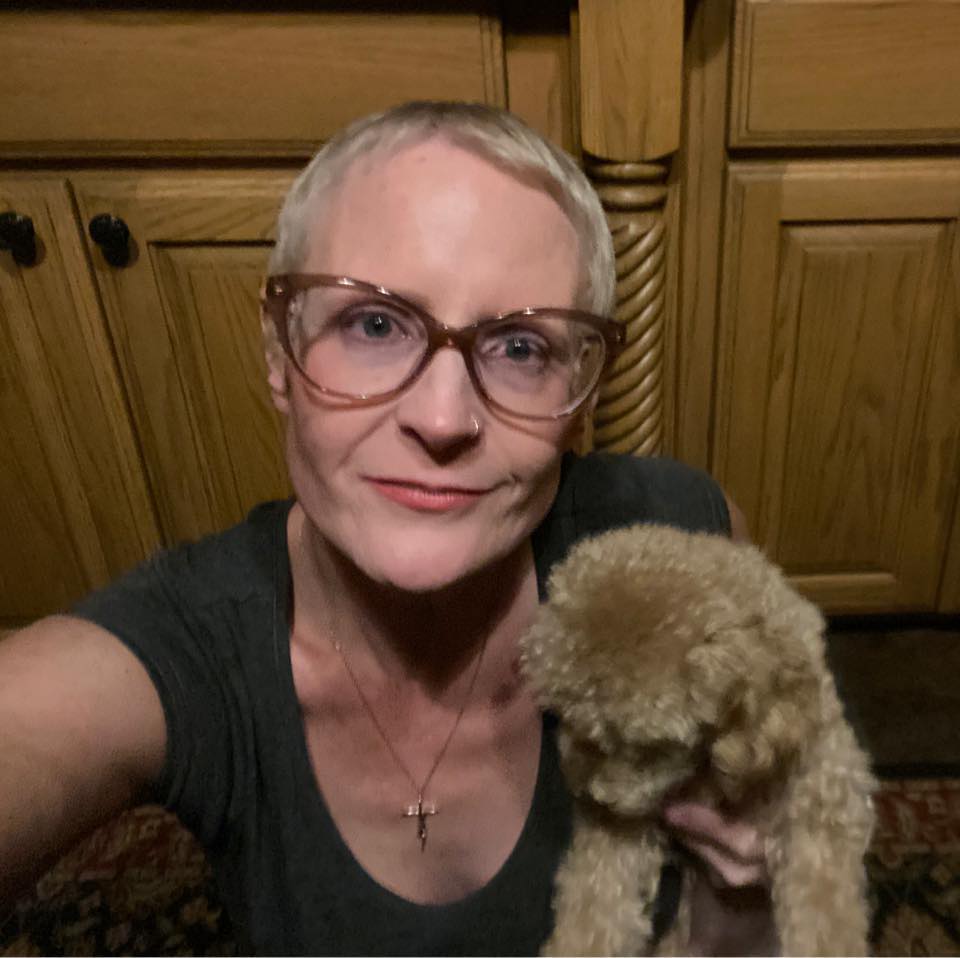
Melissa’s tremor began early in life. She was in elementary school when it became obvious the condition was interfering with everyday activities. Tasks such as brushing her teeth, writing, and playing sports were difficult for her to execute, but even more difficult were the reactions she received from others.
“I was in fourth or fifth grade, and a new girl at school asked me why I was afraid of her because I was always shaking around her. That was a pivotal moment when I realized that this sort of interaction was happening a lot. People were responding to my shaking instead of communicating with me.”
Essential tremor runs in Melissa’s family; her father developed symptoms as a teen. The way the two of them experienced tremors was very different, however. Melissa experienced shaking in all extremities of the body starting with her hands. Her arms and legs were impacted soon after, and her head and neck began to shake in her late 20s or early 30s. She also experienced internal shaking throughout her entire body which was present from the beginning. Her father’s tremors were isolated to his hands, starting with his right hand and later in life moving to both hands.
The parts of the body affected by essential tremor and the severity of the shaking varies from person to person and can be hard for doctors to diagnose. Since Melissa’s father also had the condition, her doctor was aware of the possibility that she had the same issue. This made it easier for her to obtain a diagnosis while still in elementary school. At that time essential tremor was called familial tremor.
The tremor eventually forced her to give up activities she loved, including pitching in softball.
“My movements were too jerky. I had no control. I stepped away from the sport because I didn’t want to drag the team down.”
During adolescence and adulthood, Melissa tried several medications. But instead of helping, she said many made her shaking worse.
“The medications actually increased the shaking. It felt like they kickstarted the degenerative process into overdrive.”
While Melissa retained her resilience and used humor to speak about her condition, her daily life remained challenging and exhausting.
Melissa first heard about focused ultrasound more than a decade ago during the early clinical trials. She was interested but the sites were no longer taking new patients. Years passed, and focused ultrasound slipped from her mind until a friend and old neighbor saw a TV segment about the procedure and contacted her father.
“He said, ‘You and Melissa should look into this.’”
The two took his advice and contacted Insightec about the procedure. From there they were put in touch with Andrew Conner, MD, and his team at the OU Health Neurosurgery Clinic in Oklahoma City. At this time, they are the only facility in Oklahoma offering the treatment.
Shortly after the connection was made Melissa began the evaluation process. Once approved, she pre-shaved her head for treatment.
“I thought, I’m fine with short hair – let’s just go for it.”
During the procedure, Melissa found herself far more relaxed than expected and even fell asleep in the MRI. She did notice a “strange electric wave sensation” during the final sonication.
When she emerged from the MRI, she looked at her right hand, and it was still. The entire right side of her body felt still.
“It was an amazing experience and very, very emotional. With essential tremor, there’s no cure. It’s progressively degenerative. For decades, I was told over and over by different doctors ‘there is no cure’, ‘there’s nothing we can do’ but ‘maybe medication will help.’ To actually see something truly work is just awe-inspiring.”
The effect on Melissa’s daily life was immediate and profound. She could carry a cup of coffee across the room without spilling. She could brush her teeth without making a mess and cook safely and within a reasonable amount of time.
“The first time I cracked an egg open all in one fell swoop, my eyes about bugged out of my head,” she said. “It was jaw dropping.”
After her first treatment in January 2025, Melissa underwent another focused ultrasound procedure nine months later, in October 2025, for the other side of her brain. This bilateral treatment meant that for the first time in memory, both of Melissa’s hands were tremor-free.
“It’s been just one month, and the difference is astounding. I can now put lids on jars, and my writing is so much better.”
While the results are amazing, Melissa shares that she initially experienced some dizziness and balance issues for about two weeks and a slight numbness in her tongue.
Her father, inspired by her results, also underwent focused ultrasound treatment in September 2025.
Beyond the physical changes, Melissa says the treatment has given her back her time and energy.
“For years, I’d work, come home, and just recoup from all the shaking. I was exhausted. I woke up exhausted. Now I have more energy and independence. It’s made a substantial difference in my quality of life.”
Her message to others considering focused ultrasound is simple:
“It is worth investigating, especially if your tremor is making life difficult. At the very least, look into it. I wouldn’t hesitate to do it again if I had to.”
Follow Melissa’s Journey
Melissa shares her journey on her YouTube channel: YouTube.com/@MMCShakesALot
This patient story was adapted from Melissa’s episode of the Foundation’s Curing with Sound podcast.